Call 888-654-3376

 888-654-3376
 My Account








Pick the wrong conference phone system, and the consequences show up quickly: garbled sound quality on a client call, bad service, cables running where they should not, and a meeting setup that works against how your staff operates.
The cordless phone vs corded phone debate goes beyond cable management. It involves matching equipment to how your spaces function, how your budget is structured, and what your staff needs from a call.
This guide is built for IT managers and SMB owners who want a professional digital communication solution without overspending on features their office or home office environments will never use.
Cordless vs Corded Phone: Key Differences
Corded phone units connect via Ethernet, PoE, or direct cabling to a telephone line; unlike cordless models, they rely on a fixed physical connection.
This hardwired connection offers strong stability that many wireless devices struggle to match in corporate environments. Cordless models pair a portable speakerphone to a base station over DECT, Bluetooth, or WiFi.
The evaluation criteria that drive purchasing decisions go beyond price; setup complexity, volume stability, mobility, space fit, and long-term maintenance all shape the value of what you are buying.
The table below captures how each type stacks up at a glance while highlighting the difference between a corded phone option and cordless devices.
|
Criteria |
Corded Phone Units |
Cordless Phone Units |
|
Connectivity Type |
Ethernet, PoE, or direct cabling |
Bluetooth, DECT, or WiFi |
|
Installation Requirements |
Moderate-to-high; fixed cabling required |
Low; faster deployment |
|
Audio Stability |
High; low interference risk |
Variable; depends on signal and battery life |
|
Range and Mobility |
Fixed place |
Portable; repositionable |
|
Power Source |
PoE or AC power |
Rechargeable battery power |
|
Maintenance Needs |
Low; minimal hardware upkeep |
Moderate; base unit and firmware management |
|
Best-Fit Use Case |
Permanent boardrooms and executive suites |
Flexible meeting spaces and hybrid workplaces |
Setup and Installation
Corded phones need physical infrastructure in place before you can use them, while cordless phones work as soon as you pair them to a base station. The choice comes down to one-time setup effort versus plug-and-go convenience.
On the corded side: These phones require Ethernet, PoE, or direct cabling; this means the infrastructure needs to exist before deployment begins. For organizations with fixed environments in place, that presents a minor hurdle.
During a power outage, PoE corded VoIP phones often remain operable if connected to a backup power switch. Many traditional office setups still rely on an analog home phone, landline, or a basic answering machine for fallback communication.
On the cordless side: These phones take the opposite approach to a standard landline. Pairing to the base station signal, charging the battery, and repositioning happen without a single cable run, making deployment easy to adjust. That matters most when businesses weigh a corded phone vs. a WiFi option across multi-purpose spaces where floor plans shift often.
Sound Quality and Reliability
Corded phones offer consistent call quality that doesn't depend on batteries or wireless signals, while cordless phones provide excellent sound that can fluctuate based on environmental factors.
On the corded side: These phone units deliver stable, good performance that avoids interference. This explains why they remain the preferred choice for executive meetings, high-stakes client calls, and multi-party conversations.
Large conference spaces with broad microphone pickup requirements and extended call durations favor the predictability that corded phone service systems provide.
On the cordless side: These phone models have closed the performance gap in recent years and produce excellent sound quality, but call clarity remains sensitive to signal conditions, battery levels, and network stability.
A depleted battery, a congested network, or a space with poor acoustics can degrade volume at the wrong moment. When teams conduct remote calls and discussions, any loss of voice quality creates frustration for every participant involved.
Mobility and Flexibility
Cordless phones let you move freely around the office, while corded phones stay put where they're installed. This difference matters most when your workspace layout changes frequently.
On the corded side: These phone systems are less forgiving when space requirements change; repositioning one means revisiting cabling infrastructure. Fixed placement is not a limitation by default, as many models offer headset compatibility and accessibility features.
In standardized environments where consistency matters, knowing the base unit is always in the same spot carries operational value. A fixed executive boardroom favors a corded phone.
On the cordless side: These phone handsets earn their advantage in this category. They suit shared offices, temporary meeting spaces, and hybrid environments where layouts shift and equipment needs to move with the workflow.
For businesses building hybrid-friendly environments, the practical question involves how often spaces undergo reconfiguration. A hot-desk collaboration area where a team rotates through each day favors cordless devices.
Cost and Maintenance
Corded phones cost more upfront but need minimal ongoing maintenance, while cordless phones are cheaper to install but require regular attention to batteries and base stations. The smarter comparison relies on total ownership cost rather than sticker price alone.
On the corded side: These phone installations carry higher upfront costs; cabling, labor, and PoE power add up before the first ring happens. Once the phone stands in place, ongoing maintenance demands remain minimal. You have no battery levels to monitor, no charging docks to manage, and no firmware cycles tied to battery hardware.
For businesses focused on controlling IT budgets, sourcing a refurbished corded phone or landline can extend purchasing power while delivering core performance without the retail price tag.
On the cordless side: These phones flip that equation, offering convenience at a different price point. Initial hardware and installation costs tend to be lower, but battery replacement, base station oversight, and firmware updates create recurring overhead. Factor in hardware expense, network readiness, replacement cycles, and labor over time.
A budget-conscious SMB may find that good refurbished conference phone equipment outperforms new hardware loaded with features the office will never need, while also avoiding unnecessary power consumption and cost.
Maintenance staff appreciate simple systems that reduce troubleshooting tickets. Choosing straightforward internet devices lowers the overall burden on your IT support service team.
Pros and Cons of Corded Phones
Corded phone units have held their ground in corporate environments for good reasons. The telephone line connection holds firm, indicator lights remain consistent, the receiver stays reliable, and the system avoids cordless congestion from nearby devices.
Their key benefits include:
- Stable connection with minimal interference risk through thick walls
- Dependable receiver performance for important meetings and calls
- Low sensitivity to environmental variables such as electricity fluctuations and signal strength
- Strong fit for permanent conference spaces and executive suites
Where corded phone models fall short:
- Less portable; repositioning requires infrastructure changes
- Higher installation planning and potential cabling labor upfront
- Harder to adapt as space requirements evolve over time
A corded phone is the right option for formal boardrooms, executive suites, and large conference spaces where broad microphone coverage and steady output are mandatory. For organizations prioritizing long-term reliability over deployment flexibility, they remain a lower-risk investment requiring less hands-on management once installed.
If your layout stays fixed and call clarity is the top priority, a corded phone provides a strong starting point. Even during partial power outage events, PoE setups keep calls and conversations going without interruption.
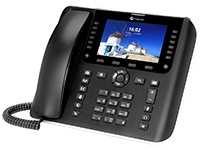
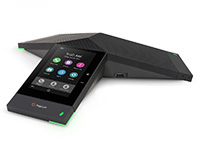
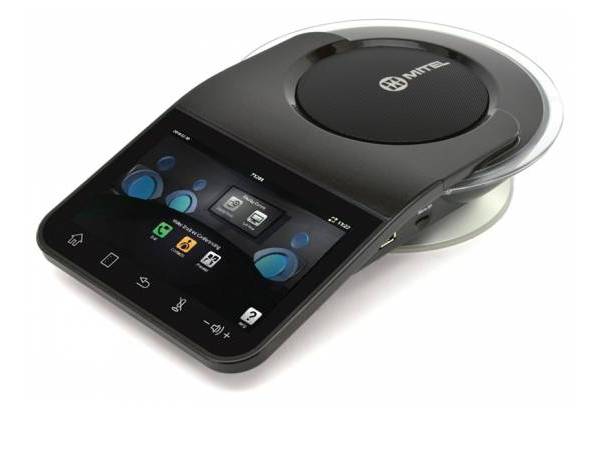
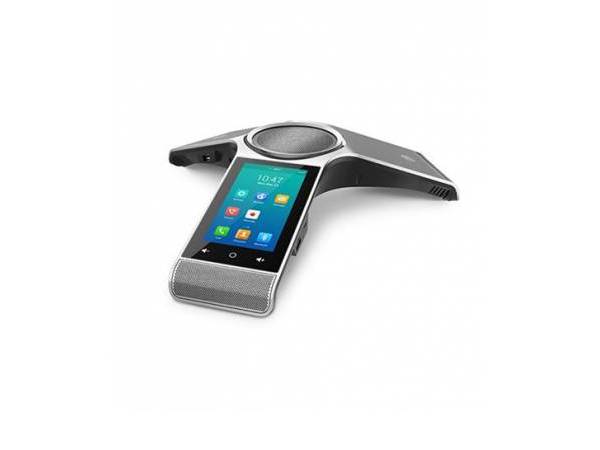
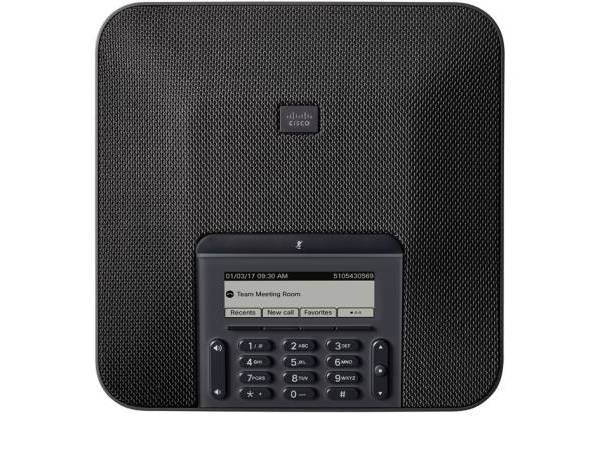
Upgrading your conference room? These top-rated conference phones deliver crystal-clear audio, seamless connectivity, and smart collaboration features to keep your team connected. Compare the best options for small, large, and hybrid workspaces below.
|
#1 The Hybrid Collaboration Hub |
#2 The Audio Powerhouse |
#3 The Compact Workhorse |
|
|
|
|
|
Mitel MIVoice UC360 ★★★★★
|
Yealink CP960 Optima HD ★★★★★
|
Cisco 7832 MPP ★★★★★
|
Pros and Cons of Cordless Phones
A cordless phone brings a different set of trade-offs to the table; for many businesses, those trade-offs land in their favor. Smartphone and Bluetooth integration add to their modern appeal.
Their key advantages include:
- Fast, low-effort deployment with no cabling required
- Portable and repositionable for shared or rotating spaces
- Cleaner desk setup with reduced visible cabling
- Strong fit for adaptable meeting spaces and hybrid-work environments
Where cordless phone systems require more management:
- Battery oversight adds an ongoing operational step
- Sound quality varies with signal strength or battery power level
- Performance depends on space layout and cordless network quality
Cordless conference base station units match small meeting spaces, huddle spaces, and businesses transitioning toward IP-based communication service infrastructure. For businesses making that shift, wireless IP phones offer the same cordless setup on an IP network. They align with how distributed teams prefer to work, and for organizations moving equipment between spaces, the absence of fixed cabling serves as an operational advantage.
This category continues to evolve, with newer models delivering good performance that rivals traditional corded phone setups in most business environments.
Which Conference Phone System Is Best for Your Business or Home Office?

Choosing between a cordless and a corded phone seldom has a single universal answer. The right technology matches how people use meeting spaces rather than boasting the most impressive spec sheet.
Use the decision matrix below to self-qualify based on the factors that matter most to your operation. Weigh technical fit against business outcomes such as uptime, ease of use, and the ability to scale without a full infrastructure overhaul.
|
Business Factor |
Lean Corded Phone |
Lean Cordless Phone |
|
Room Size |
Large (10+ participants) |
Small to medium |
|
Meeting Frequency |
High-stakes calls |
Occasional, internal |
|
Layout Changes |
Rarely |
Often |
|
Existing Infrastructure |
Ethernet/PoE in place |
Limited cabling |
|
Budget Priority |
Long ownership |
Low up-front cost |
|
Portability Need |
Not required |
Important |
Best for Small Meeting Rooms
A compact meeting area does not need enterprise hardware; buying more capability than the space can use is a fast way to overspend. For compact spaces used for internal check-ins and occasional client calls, the right phone keeps things simple.
Key buying factors include:
- A smaller microphone footprint suited to the space
- Minimal IT involvement for setup and basic usage
- Cost-efficiency that avoids sacrificing core audio quality
- A clean desktop layout that avoids cluttering a surface
Cordless handsets or compact corded phone handsets both work well here, depending on whether the space serves a single purpose or rotates between uses. A huddle space used for short stand-ups and periodic vendor calls serves as a prime example.
These spaces demand hardware that is easy to manage and cost-efficient without compromising performance. Compact units fit in the middle of a desk while still capturing multiple voices.
Scale the conversation up, and the requirements shift toward larger base units. Dynamics change when transitioning from a four-person huddle to a twenty-person boardroom.
Best for Large Conference Rooms
Scale changes the equation in middle to large spaces, including boardrooms, executive suites, and client presentation spaces. Volume performance carries business weight, and a dropped call costs more than a few minutes of inconvenience.
A corded phone represents the stronger option for large deployments. Key performance needs at this scale include:
- Stronger speaker output for rooms with more participants
- Expanded microphone coverage to capture voice across a larger table
- Interference-free performance for extended meetings and multi-party calls
Think of a boardroom hosting quarterly business calls or vendor negotiations; a setting where failure carries consequences beyond technical frustration. In those environments, the predictability of a corded phone justifies the upfront installation investment.
In larger rooms, a standard landline or device with limited range may be inadequate for serious business conversations if participants cannot be heard clearly.
Best for Hybrid Workspaces
Hybrid workplaces present a distinct challenge; spaces serve multiple purposes, teams rotate through, and the same space might host an internal stand-up in the morning and a remote client meeting later. Cordless and hybrid-friendly solutions cater to this scenario.
The right technology supports mobility without sacrificing professional call quality, making battery power, signal range, and internet stability meaningful evaluation criteria. A business that moves conference units between training spaces, open collaboration areas, and client-facing spaces may find a portable cordless conference phone practical.
When the space changes, the phone moves with it without cable runs, infrastructure planning, or IT tickets required. That kind of operational ease makes a cordless phone the natural fit for modern, evolving workplaces where flexibility is paramount.
|
Key Insight: The decision matrix reveals that the ideal conference phone system isn't about absolute superiority; it's about operational alignment. Match your room's size, meeting frequency, and layout flexibility to the right technology, and avoid overspending on conference phone features your space won't use. |
Find the Right Phone Setup with PCLiquidations
Once you identify the right type of corded phone or base station phone for your spaces, the next step involves sourcing units that deliver on performance without draining the IT budget. A reliable technology partner makes all the difference here.
PCLiquidations has helped budget-conscious businesses build solid communication infrastructure since 1991, operating as a solution-focused vendor rather than a transactional reseller. With up to a 1-year warranty and a 5-star rating across 15,000+ reviews, the company delivers refurbished business-grade phones and IT equipment that meet enterprise standards without the retail price tag.
Choosing a refurbished corded phone or battery-powered hardware extends equipment life and reduces electronic waste, making it a smart business decision with a lower environmental footprint.
Shop refurbished phones at PCLiquidations and see what is available for your configuration. Prefer to talk it through first? Call 888-654-3376 to speak with a dedicated account manager about your specific requirements.